


Chasing Stars in Chandrataal
Introduction
Ladakh sits close to 11,000 feet, dry and remote enough that its night sky still looks the way it must have a hundred years ago. No haze, no city glow, just stars everywhere.That's the sky I went chasing.
The first week, though, had nothing to do with stars and everything to do with me fumbling my camera settings. Astrophotography sounds easy on paper i.e. wide aperture, long exposure, high ISO, but at altitude, in the cold, in total darkness, it's a mess. I spent eight or nine nights getting star trails when I wanted sharp points of light, or grainy frames when I pushed ISO too far. Focusing manually on nothing but stars, with numb fingers and a screen I could barely read, took forever to get right.
Just as I started getting the hang of it, the clouds showed up. Night after night I'd hike out with my tripod, wait for hours, and watch grey drift across the sky right when the Milky Way core was supposed to rise. For a place famous for clear skies, I got an unfair number of overcast nights.
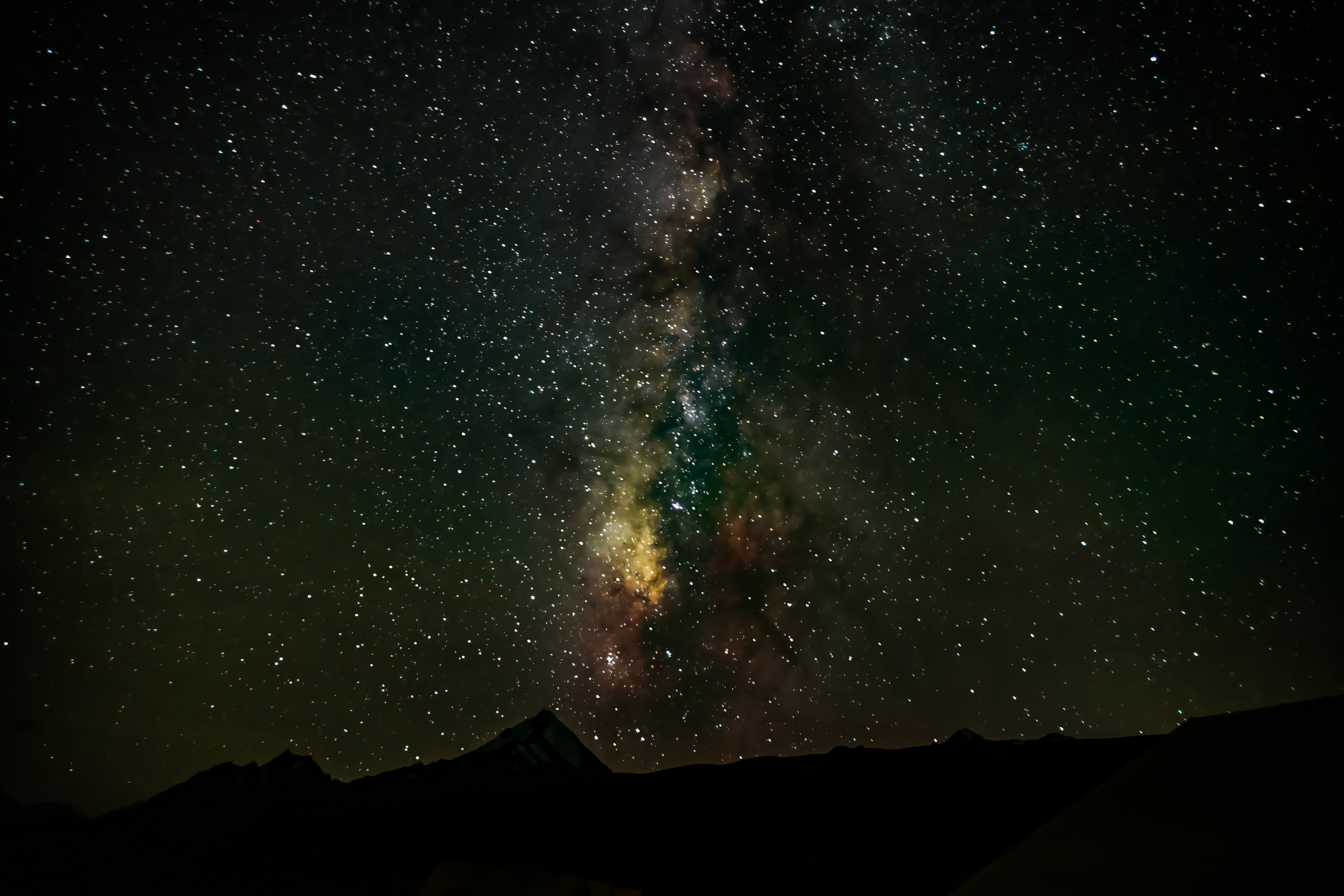
Then I reached Chandrataal. The lake sits above 14,000 feet, and the night I got there, the sky was finally, completely clear. I set up with the settings I'd spent over a week fighting for, framed the shot, and waited with my uncle who set up his own camera, what was fun during the entire trip was a comparison between his clicks and mine.
The shot that came back had the whole galactic band. After more than a week of bad settings and worse weather, it felt less like luck and more like something I'd earned.